If your website still runs on HTTP, you are already behind. Not just from a security perspective, but from an SEO, trust, and usability standpoint too.
This guide explains the difference between HTTP and HTTPS, what an SSL certificate actually does, and why it matters for UK websites in practical terms. No technical waffle, just the essentials you need to understand.
What Is HTTP?
HTTP stands for Hypertext Transfer Protocol. It is the system used to send information between a user’s browser and a web server.
The problem is simple. HTTP sends data in plain text.
That means:
- Information can be intercepted
- Login details can be exposed
- Form submissions are not secure
- Users and browsers cannot trust the connection
Modern browsers treat HTTP as unsafe because, frankly, it is.
What Is HTTPS?
HTTPS is the secure version of HTTP. The “S” stands for Secure.
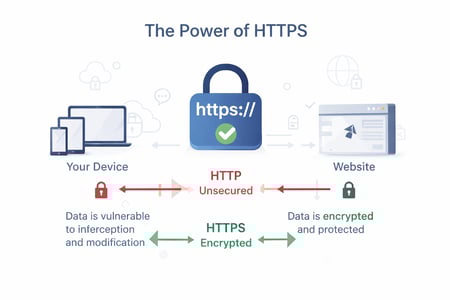
HTTPS uses encryption to protect data as it moves between the browser and the server. This encryption is enabled by an SSL certificate.
When HTTPS is in place, data such as:
- Contact form submissions
- Login credentials
- Payment details
- Personal information
is encrypted and unreadable to third parties.
What Is an SSL Certificate?
An SSL certificate is a digital certificate that:
- Verifies the identity of a website
- Encrypts data transferred between the server and users
SSL stands for Secure Sockets Layer, although technically most modern sites use TLS, its successor. The term SSL is still used universally.
When an SSL certificate is installed correctly, users see:
- A padlock icon in the browser
- An HTTPS URL
- Security warnings removed
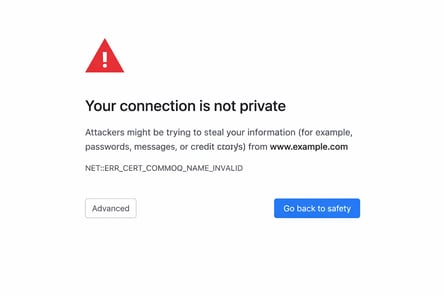
Without it, browsers actively warn users that the site is “Not Secure”.
How SSL Certificates Work in Simple Terms
When a user visits an HTTPS website:
- The browser requests the site’s SSL certificate
- The certificate confirms the site’s identity
- An encrypted connection is established
- Data is exchanged securely
This process happens in milliseconds, but it is critical for trust and data protection.
Cloudflare provides a clear technical breakdown if you want to go deeper:
Why SSL Certificates Matter for SEO
HTTPS is a confirmed Google ranking factor.Google announced this back in 2014, and it remains a baseline expectation today:
From an SEO perspective, SSL impacts:
Trust and user behaviour
Users are far more likely to leave a site flagged as insecure. High bounce rates and poor engagement indirectly affect performance.
Browser warnings
Chrome, Safari, and Edge actively warn users away from non-HTTPS pages, especially on forms.
Data integrity
HTTPS prevents content injection, which can otherwise interfere with how your pages are rendered and indexed.SSL alone will not boost rankings, but not having it will hold you back.
HTTP vs HTTPS: Key Differences
HTTP
-
No encryption
-
Data sent in plain text
-
Marked as “Not Secure”
-
Not suitable for modern websites
HTTPS
-
Encrypted connection
-
Protects user data
-
Builds trust and credibility
-
Required for e-commerce and forms
-
Expected by search engines
For UK businesses, especially those handling customer data, HTTPS is non-negotiable.
Types of SSL Certificates Explained
Domain Validation (DV)
-
Basic encryption
-
Fast to issue
-
Common for blogs and small sites
Organisation Validation (OV)
-
Verifies business identity
-
Stronger trust signals
-
Suitable for service-based businesses
Extended Validation (EV)
-
Highest level of verification
-
Displays company details in certificates
-
Often used by financial institutions and large brands
For most SMEs, DV or OV certificates are sufficient.
Common SSL and HTTPS Mistakes
Even sites with SSL can get this wrong.
Common issues include:
-
Mixed content errors from HTTP assets
-
Incorrect redirects from HTTP to HTTPS
-
Canonical tags pointing to HTTP URLs
-
Internal links still use HTTP
-
SSL is installed on some pages, but not all
These problems can undermine both security and SEO if not resolved properly.
Is HTTPS Enough on Its Own?
No!
SSL certificates are a baseline requirement, not a full security solution. You still need:
-
Secure hosting
-
Updated software
-
Strong passwords
-
Proper technical SEO setup
But without HTTPS, everything else is built on weak foundations.
Final Thoughts
HTTPS is no longer a “nice to have”. It is a baseline requirement for trust, security and modern search visibility.
An SSL certificate protects user data, prevents tampering and reassures visitors that your site is safe to use. It also sends clear quality signals to browsers and search engines, both of which now expect secure connections as standard. If your website is still running on HTTP, it is not just a technical issue. It is a credibility gap that can quietly undermine performance, conversions and rankings.
Fixing HTTPS should not live in the backlog. It should be treated as a priority that supports everything else you do in SEO, from content and links to user experience and conversion rate optimisation.
Ready to grow your organic traffic?
If you are unsure where to start or want expert support that goes beyond surface-level fixes, the team at StudioHawk can help. We work with ambitious brands to build SEO strategies that are technically sound, content-led and designed for long-term growth, not quick wins that fade.
Speak to our SEO experts today and find out what your site is really capable of.
Book a free consultation and see what’s possible.